
Bitcoin has pulled back sharply as September trading begins, and the Bitcoin price prediction for the weeks ahead now hinges on whether key support levels can hold.
BTC fell from a local high of $81,474 on August 28 to around $76,732, a drop of nearly 6%. The move has put chart watchers and on-chain analysts on alert.
Why Is Bitcoin Falling in September?
September has a reputation among traders as a weak month for Bitcoin. Historically, the asset has struggled during this period more than in other months of the year.
This year is following a similar pattern so far. On the first day of the month, Bitcoin dropped below $77,000, adding to concerns among short-term traders.
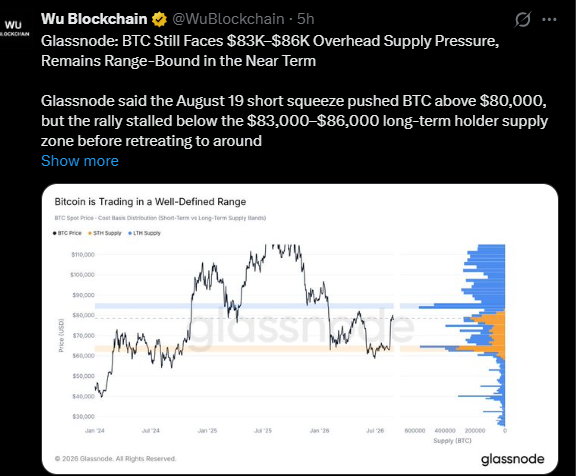
The pullback comes after a short squeeze on August 19 pushed BTC above $80,000. That rally stalled just below a major resistance zone before reversing lower.
What Do the Charts Show for Bitcoin Right Now?
On the 4-hour chart, Bitcoin has formed a head and shoulders pattern, a setup traders often view as a signal of possible further downside.
Price has already broken below the neckline of this pattern and is now retesting it from below. If that retest fails and gets rejected, the pattern points toward a possible move down to around $71,000.
However, the setup would be invalidated if Bitcoin reclaims the neckline and holds above it. That would suggest the bearish pattern has failed and buyers have regained control.
What Are the Key Support and Resistance Levels for Bitcoin?
According to on-chain analytics firm Glassnode, Bitcoin faces overhead supply pressure between $83,000 and $86,000. This zone represents where many long-term holders acquired their coins, making it a likely area of selling.
On the downside, the $62,000 to $65,000 range stands out as the key support zone to watch. Glassnode expects Bitcoin to remain range-bound until the supply near $83,000 to $86,000 is absorbed by buyers.
When BTC traded near $78,000 recently, the share of Bitcoin supply held in profit rose to 68%, up from 65% in May. A higher percentage of profitable supply can mean more coins are available to be sold, adding pressure to price.
Are Whales Still Buying Bitcoin During the Dip?
Despite the recent price drop, large holders known as whales have kept buying. Over the recent pullback period, whales purchased roughly 6,765 BTC, worth about $521 million.
This kind of accumulation during a price decline is often watched closely by traders, since it can signal confidence from larger market participants even when short-term price action looks weak.
What Is Happening in the Bitcoin Options Market?
In the options market, short-term sentiment has cooled after an initial burst of bullishness. The 7-day 25-delta skew rose sharply during the August 19 short squeeze as traders rushed to buy upside call options.
That skew has since moved back toward neutral. Meanwhile, the 180-day skew has stayed stable, suggesting longer-term demand for optionality has not changed much even as short-term enthusiasm faded.
A large amount of open interest, close to $14 billion across Deribit and IBIT, is set to expire on September 25. Much of this positioning sits above the $80,000 level, which could influence price action as the expiry date approaches.
What Could Move Bitcoin Next?
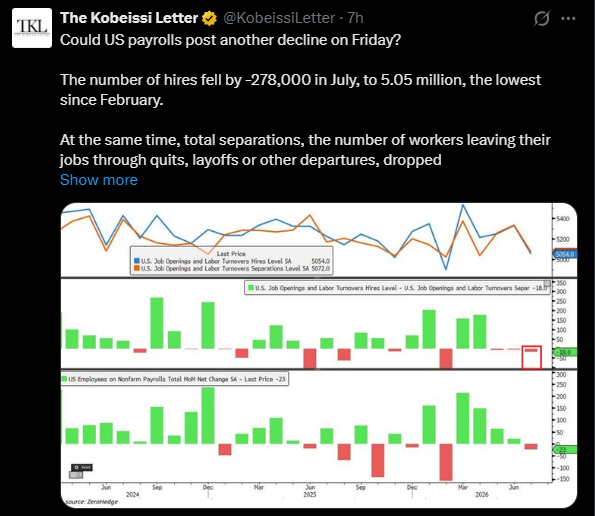
According to The Kobeissi Letter, Broader macro conditions may also play a role. Weakness in the US labor market has been a talking point recently, with hiring and separations data pointing to a slowing job market.
Weak jobs data can sometimes affect investor risk appetite across markets, including crypto, depending on how it shapes expectations for interest rates and monetary policy.
For now, Bitcoin's near-term path looks tied to whether the neckline retest on the 4-hour chart holds or fails, and whether the $62,000 to $65,000 support zone is tested if selling pressure continues.
Financial Disclaimer
This article is for informational purposes only and does not constitute financial advice. Cryptocurrency markets are highly volatile and carry significant risk. Readers should conduct their own research and consult a qualified financial advisor before making any investment decisions.