Key Takeaways
-
Tokenomics describes how a token is created, distributed, and used, not just its price.
-
Supply structure, allocation, and vesting schedules affect long term sell pressure.
-
Genuine utility and balanced incentives are stronger signals than hype or marketing claims.
-
Always verify tokenomics data using primary sources: whitepapers, on chain data, and reputable tracking platforms.
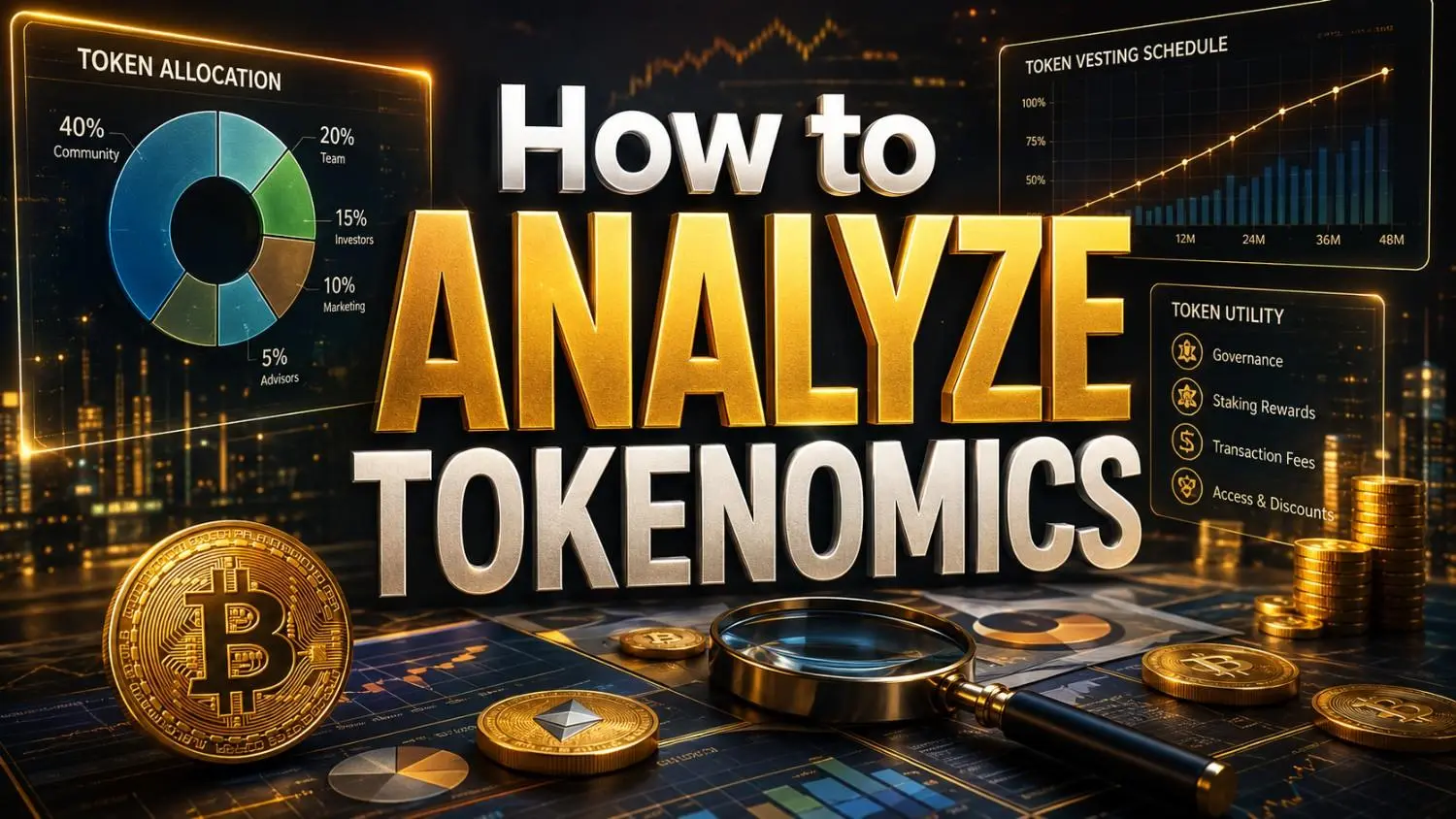
Knowing how to analyze tokenomics is one of the most useful skills a crypto investor can build. Tokenomics, the economic design behind a cryptocurrency, often determines whether a project can sustain long-term value or collapses under its own supply. This guide breaks down exactly what to look for.
What Is Tokenomics?
Tokenomics refers to the economic structure of a cryptocurrency: how tokens are created, distributed, used, and removed from circulation. It covers supply mechanics, allocation, utility, and incentive design.
A well-structured tokenomics model aligns the interests of founders, investors, and users, while a poorly designed one can lead to excessive sell pressure or centralized control.
Why Does Tokenomics Matter for Investors?
Price charts show what a token has done. Tokenomics helps explain what it's likely to do next. Two projects with similar technology can perform very differently depending on how their tokens are structured, how much supply is unlocked, who holds it, and what actually creates demand for the token beyond speculation.
This is why learning how to analyze tokenomics matters more than watching price movements alone.
What Should You Check First: Total Supply or Circulating Supply?
Check whether a project has a fixed supply, an inflationary model (new tokens minted over time), or a deflationary model (tokens burned or removed from circulation). Also distinguish between:
-
Total supply, the maximum number of tokens that will ever exist
-
Circulating supply, tokens currently available in the market
-
Fully diluted valuation (FDV), market cap if all tokens were in circulation
A large gap between circulating supply and total supply can signal future sell pressure as more tokens unlock.
How Is Token Allocation Distributed?
Look at how tokens are distributed among:
-
Team and founders
-
Private and public investors
-
Ecosystem or community incentives
-
Treasury or foundation reserves
-
Public sale or presale participants
A heavy concentration in team or early investor wallets increases the risk of large sell offs once vesting periods end.
What Are Vesting Schedules and Why Do They Matter?
Vesting schedules determine when locked tokens become available for sale. Projects with long, gradual vesting periods tend to have more predictable supply dynamics than those with large single date unlocks, which can create sudden downward price pressure.
Does the Token Have Real Utility?
Ask what the token is actually used for:
-
Paying network transaction fees
-
Governance voting rights
-
Staking for rewards or network security
-
Access to specific platform features
-
Collateral within a DeFi protocol
Tokens with genuine utility tend to have more sustainable demand than tokens that exist primarily for speculative trading.
How Do Incentive Structures Affect Token Value?
Examine how the protocol rewards participants, including stakers, liquidity providers, validators, or active users.
Overly generous incentives funded by inflation can dilute holders over time, while well calibrated incentives can support network growth without excessive dilution.
What Is a Token Burn and How Does It Work?
Some projects reduce circulating supply through token burns, tied to transaction fees, buybacks, or protocol revenue. Burns can support scarcity, but they should be evaluated alongside actual usage data rather than taken at face value.
What Are the Red Flags in Tokenomics?
-
Extremely high allocation to founders or private investors with short vesting
-
No clear utility beyond speculation
-
Unclear or missing documentation on supply mechanics
-
Large, concentrated wallet holdings, sometimes called whale risk
-
Inflationary rewards with no offsetting demand or burn mechanism
Where Can You Find Reliable Tokenomics Data?
-
The project's official whitepaper or documentation
-
On chain explorers such as Etherscan or Solscan for wallet distribution
-
Tracking platforms like CoinGecko or CoinMarketCap for supply data
-
Vesting and unlock trackers that show upcoming release schedules
Conclusion
Learning how to analyze tokenomics won't predict short term price movements, but it gives investors a clearer picture of a project's long term structural risks and incentives.
Reviewing supply mechanics, allocation, vesting, and utility before evaluating any token is a practical habit,