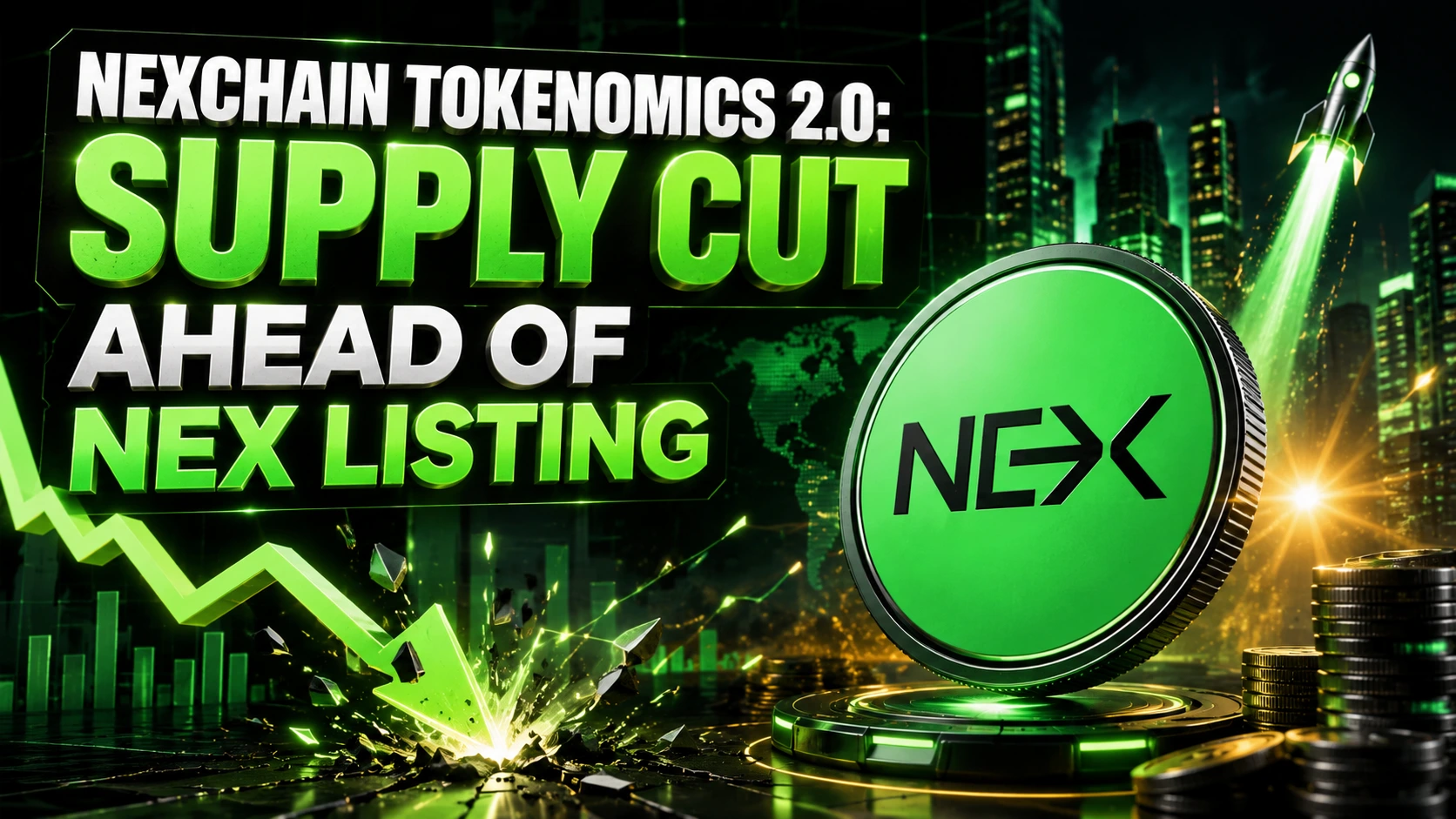
Nexchain, a layer-1 blockchain project currently running a token presale, has announced what it calls "Tokenomics 2.0" — a revision that reduces the total supply of its native NEX token by more than half.
According to the project, total supply drops from 2.15 billion to 1 billion tokens, a change Nexchain says is intended to lower the token's fully diluted valuation (FDV) heading into its planned exchange listing.
The update comes as the presale enters its final stages, with the project's own tracker showing more than $17 million raised and over 13,000 participants to date, according to figures published on Nexchain's official site.
Table of Contents
- What Nexchain Says Changed
- How the Presale Pricing Works
- Why Projects Cut Token Supply
- What This Means for Prospective Buyers
- Key Takeaways
- FAQ
What Nexchain Says Changed
Nexchain describes Tokenomics 2.0 as a restructuring of its supply schedule. Per the project's announcement, cutting total supply in half is meant to produce a lower FDV and smaller market capitalization at the point of listing.
In practice, a lower FDV means the implied value of all tokens in circulation is smaller relative to the original 2.15 billion supply model.
The project frames this as beneficial to early participants, arguing that a "leaner" launch valuation leaves more room for price appreciation post-listing.
It's worth noting this is the project's own characterization of the change, not an independently verified market outcome — token price performance after listing is not guaranteed and depends on exchange liquidity, market demand, and broader crypto market conditions.
How the Presale Pricing Works
According to data published by Nexchain, the presale is structured in numbered stages, each with an incrementally higher token price. The project's current promotional materials show:
- Stage 1 price: $0.010
- Recent stage price: $0.188
- Current "bonus" stage price: $0.07
- Stated listing price: $0.30
Nexchain says each successive stage also carries a smaller token allocation than the one before it, a mechanism the project describes as designed to shorten the remaining presale window as it nears completion.
Why Projects Cut Token Supply
Reducing total token supply is a common strategy among early-stage crypto projects preparing for an exchange listing. A smaller supply can lower the reported FDV, a metric some investors use as a quick gauge of a project's implied valuation.
However, financial analysts and blockchain researchers have noted that FDV reductions achieved through supply cuts don't inherently change the underlying value or utility of a project — they primarily affect how the numbers are presented.
Prospective buyers are generally advised to look beyond headline tokenomics figures and examine a project's actual utility, team transparency, audit history, and exchange commitments before making a decision.
What This Means for Prospective Buyers
For anyone evaluating the NEX presale, the tokenomics change itself is a data point, not a guarantee of returns.
Presale-stage cryptocurrencies carry substantial risk, including the possibility that a token never lists on a major exchange at the price stated in promotional materials, or that liquidity at listing is insufficient to support the stated valuation.
As with any presale investment, independent due diligence — including checking for smart contract audits, verifying team identities, and reviewing legal disclosures — is strongly recommended before committing funds.
Key Takeaways
- Nexchain's Tokenomics 2.0 update reportedly halves total NEX supply, from 2.15B to 1B tokens.
- The stated goal is a lower FDV and market cap at listing, according to the project.
- Presale pricing stages are structured to increase over time, per Nexchain's published price chart.
- All figures cited come from Nexchain's own materials and have not been independently verified.
- Crypto presales carry significant risk; independent research is recommended before investing.
Call to Action
Readers considering any crypto presale should conduct independent research and consult a licensed financial advisor. This article is for informational purposes only and does not constitute financial advice