
BlockDAG STABLECOIN Beta Opens BDUSD Testing on Mainnet
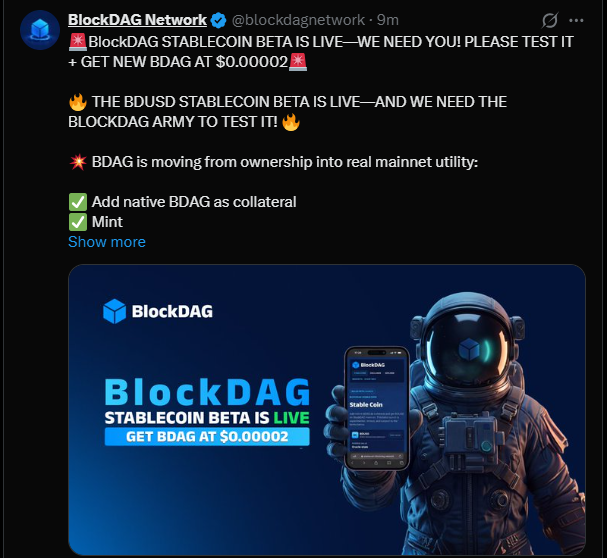
The BlockDAG STABLECOIN beta is now available for users who want to test BDUSD on the BlockDAG mainnet. The beta lets users add native BDAG as collateral, mint BDUSD within an available collateral limit, use supported beta flows and repay the position.
BlockDAG's official beta page describes BDUSD as a synthetic dollar asset backed by BDAG collateral. It also says the system is experimental and is not USDT, USDC, fiat money or a guaranteed $1 claim.
The launch gives the BlockDAG community a direct way to examine how the proposed stablecoin system works in a live network environment.
How does the BlockDAG STABLECOIN beta work?
The process starts when a user adds native BDAG to the collateral vault. After that, the system calculates the available amount of BDUSD that can be minted against the position.
Users can then mint BDUSD to the connected wallet and use it in supported beta flows. When finished, BDUSD must be returned before unlocked BDAG can be withdrawn.
The official interface also shows that network gas is paid in BDAG. User actions are wallet-signed, while the frontend cannot mint BDUSD or move BDAG without the connected wallet approving the transaction.
This structure is important because the beta is testing more than a token contract. It is testing the interaction between collateral, debt, oracle pricing, wallet signatures and the BlockDAG mainnet.
What is BDUSD backed by?
BDUSD is backed by native BDAG collateral rather than fiat reserves. BlockDAG's official stablecoin page calls it a beta synthetic dollar asset.
The beta deployment page says its configuration uses a $50,000 reserve target and a 25,000 BDUSD debt ceiling at 200% collateralization. These figures describe the beta configuration shown by the project, not a promise of permanent capacity.
The system also includes an oracle, risk manager, liquidation contract, treasury and native collateral vault. The project publishes the relevant contract addresses on its beta interface for public review.
| Beta component | Published detail |
|---|---|
| Asset | BDUSD |
| Collateral | Native BDAG |
| Network | BlockDAG Mainnet |
| Gas token | BDAG |
| Reserve target | $50,000 |
| Debt ceiling | 25,000 BDUSD |
| Stated collateralization | 200% |
| Model | BDAG-backed synthetic dollar |
| Status | Experimental beta |
What can users test in the BDUSD beta?
The current beta supports four main steps.
First, users can add BDAG to the native collateral vault. Second, they can mint BDUSD within the available collateral limit.
Third, users can test supported BDUSD flows. Finally, they can repay BDUSD and withdraw BDAG that has become unlocked.
The testing process can help expose issues involving wallet connections, transaction signing, oracle updates, contract behavior and position health.
The project says its dashboard provides read-only information for reserve and statistics, while user transactions remain wallet-signed. That distinction matters when assessing what the frontend can and cannot control.
Why does the beta matter for BlockDAG?
A stablecoin system can become an important part of a blockchain's DeFi infrastructure because it gives users a dollar-denominated unit for applications such as trading, lending and payments.
For BlockDAG, BDUSD also provides a test of whether native BDAG can serve as collateral inside an on-chain financial system.
BlockDAG describes its mainnet as EVM-compatible and designed to support applications including stablecoins, lending, borrowing, payments and decentralized applications.
The beta therefore offers a practical test of those claims. Network activity, contract reliability and user experience will matter more than the announcement itself.
Is BDUSD a USDT or USDC alternative?
No. BlockDAG's own beta documentation says BDUSD is not USDT, USDC, bank money, e-money, stored value or a fiat-backed claim.
There is also no stated promise to redeem BDUSD for $1, USDT or fiat currency.
That distinction is central to understanding the launch. Users are testing an experimental collateralized system, not buying a conventional fiat-backed stablecoin.
What risks should users consider?
The main risk is collateral volatility. Because BDUSD positions use BDAG, a sharp change in BDAG's value can affect the health of a user's position.
There are also smart contract, oracle, wallet, RPC and network risks. The official beta notice says positions can become unsafe and may be liquidated.
Users should also understand that beta software can change. Contract upgrades, risk parameters, pause controls and oracle roles are governed through administrative controls described on the project interface.
The published beta page also states that no full-version launch is being offered through the beta and that the system is not investment, legal, tax or trading advice.
What is the current BDAG purchase figure?
The supplied launch information states a direct BDAG price of $0.00002, with no bonuses or codes.
At that stated figure, the arithmetic works out as follows:
| Amount | BDAG at $0.00002 |
| $100 | 5,000,000 BDAG |
| $500 | 25,000,000 BDAG |
| $1,000 | 50,000,000 BDAG |
| $5,000 | 250,000,000 BDAG |
These calculations are based only on the stated $0.00002 figure. They should not be read as a prediction of future value.
What should users watch next?
The next useful signals will be on-chain activity, contract behavior, collateral health, oracle performance and the number of users able to complete the full mint and repayment cycle.
The beta page publishes contract addresses and recent activity information, giving users a starting point for independent verification.
For a stablecoin launch, the important question is not only whether minting works. It is whether the collateral, pricing and liquidation system continue to behave correctly under different market conditions.
The BlockDAG STABLECOIN beta is therefore an early technical test rather than a finished financial product. How the system performs as usage grows will likely shape the project's next steps.